
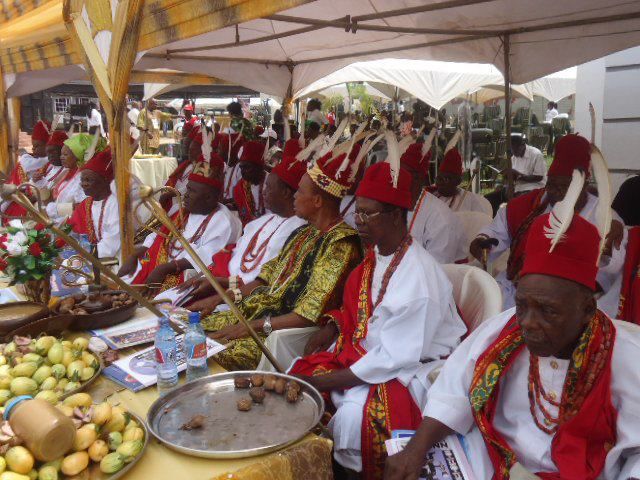
She had a degree. She had a career. She had a life built entirely on the foundation of hard work and personal merit. And then, the moment she tried to marry the man she loved, a single word reached across generations and undid everything.
Osu.
What Is the Osu Caste System?
The Osu system is a form of hereditary social stratification historically practiced in Igbo communities in southeastern Nigeria. In traditional Igbo society, an Osu was a person dedicated or consecrated to a deity, a living sacrifice offered to an oracle or shrine. This consecration, which could occur voluntarily or involuntarily and which was sometimes imposed on an entire family as punishment or tribute, created a permanent and inherited social designation.
The Osu and their descendants were considered the property of the gods. They were set apart from the freeborn Igbo and could not intermarry with them, share communal meals, hold certain community titles, or participate fully in civic life. These restrictions were not merely social customs. They were enforced with the weight of spiritual authority and community sanction.
Does It Still Exist?
Yes. Despite Nigeria’s modernization, the spread of Christianity throughout Igbo communities, and the explicit condemnation of the practice by church leaders and civil rights advocates, the Osu stigma persists with remarkable tenacity. It persists in the questions a family asks before approving a marriage. It persists in the whispered background checks conducted by relatives who will never admit they are conducting them. It persists in the quiet devastation of couples who discover, sometimes years into a relationship, that their families will never accept their union.
Education, wealth, and professional success offer no protection. An Osu descendant who becomes a doctor or a professor or a successful entrepreneur remains, in the eyes of communities that uphold the system, irrevocably marked.
The Human Cost
The human cost of the Osu system is measured in broken engagements, estranged families, and lives quietly dismantled by a stigma that the person carrying it did nothing to earn. Young people discover their Osu heritage and face an impossible choice, to hide it and live in fear of discovery, or to disclose it and watch their relationships dissolve.
The psychological impact is profound. To be told that your ancestry makes you spiritually contaminated, that your love is a threat to another family’s purity, is a form of violence that leaves no visible marks.
The Story Behind The Forbidden Union
The Forbidden Union was written for every person who has ever been told that who they are is not enough, not because of anything they did, but because of something their ancestors could not help. The protagonist’s journey, from the shock of discovery to the decision of whether to fight or flee, is a story about the collision between the modern self and the ancient world that refuses to release its grip.
It is also a love story. Because love, when it is real, does not simply disappear because a family says it should.
Some unions are forbidden. Not all of them stay that way.