
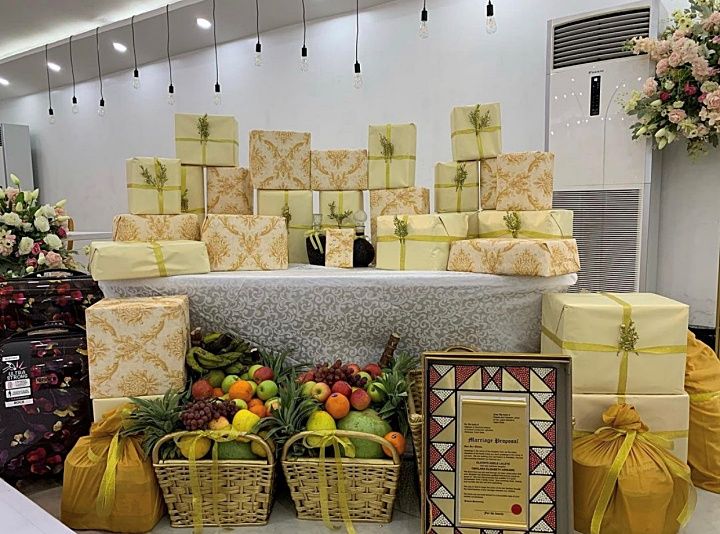
In theory, it is a celebration. A formal acknowledgment of a woman’s worth, a ritual exchange between two families that seals a union and establishes respect. In practice, for far too many women, it becomes the price tag that defines their captivity.
The truth about bride price in Nigeria, as with most deeply rooted traditions, lives somewhere in the complicated space between these two realities.
What Is Bride Price?
Known as Ime ego or Ika nkwu in Igbo tradition, bride price is the transfer of money, goods, livestock, or symbolic items from the family of the groom to the family of the bride as part of the formal marriage process. It is practiced in various forms across most Nigerian ethnic groups and across much of sub-Saharan Africa.
Proponents of the tradition argue that it is a gesture of gratitude and respect, an acknowledgment by the groom’s family that they are receiving a woman of value and that her family is being honored rather than simply losing a member. In many families, the bride price negotiation is a joyful ceremony involving music, community, and shared celebration.
Where It Goes Wrong
The problem arises when the payment of bride price is interpreted not as a symbol of honor but as a transaction of ownership. When a man or his family uses the payment of bride price as justification for treating a woman as property, the tradition transforms from a cultural celebration into a mechanism of entrapment.
This interpretation manifests in specific and damaging ways. A woman who wishes to leave an abusive marriage may find herself unable to do so because her family cannot repay the bride price, having spent or distributed it years earlier. In some communities, a woman cannot traditionally leave her husband’s home without the bride price being returned, regardless of the conditions she is leaving behind.
The woman becomes, in the most direct economic sense, a purchased asset. And purchased assets are not expected to have opinions about their own futures.
The Legal Reality
Nigerian courts have in several landmark cases ruled that the non-return of bride price cannot be used to prevent a woman from dissolving a marriage. The law is clear. The practice, however, continues to operate outside the law in countless communities where the traditional sanction of the elders carries more weight than any court ruling.
The Story Behind The Price of a Bride
The Price of a Bride follows a woman who becomes a fugitive in her own community, working in secret, kobo by kobo, to buy her own freedom back. Her story is about economic agency, about a woman who refuses to wait for anyone else to pay the price of her liberation.
It is also about the absurdity and the tragedy of a system that places a monetary value on a human being and then calls it love.
Freedom has a price. She is determined to pay it herself.